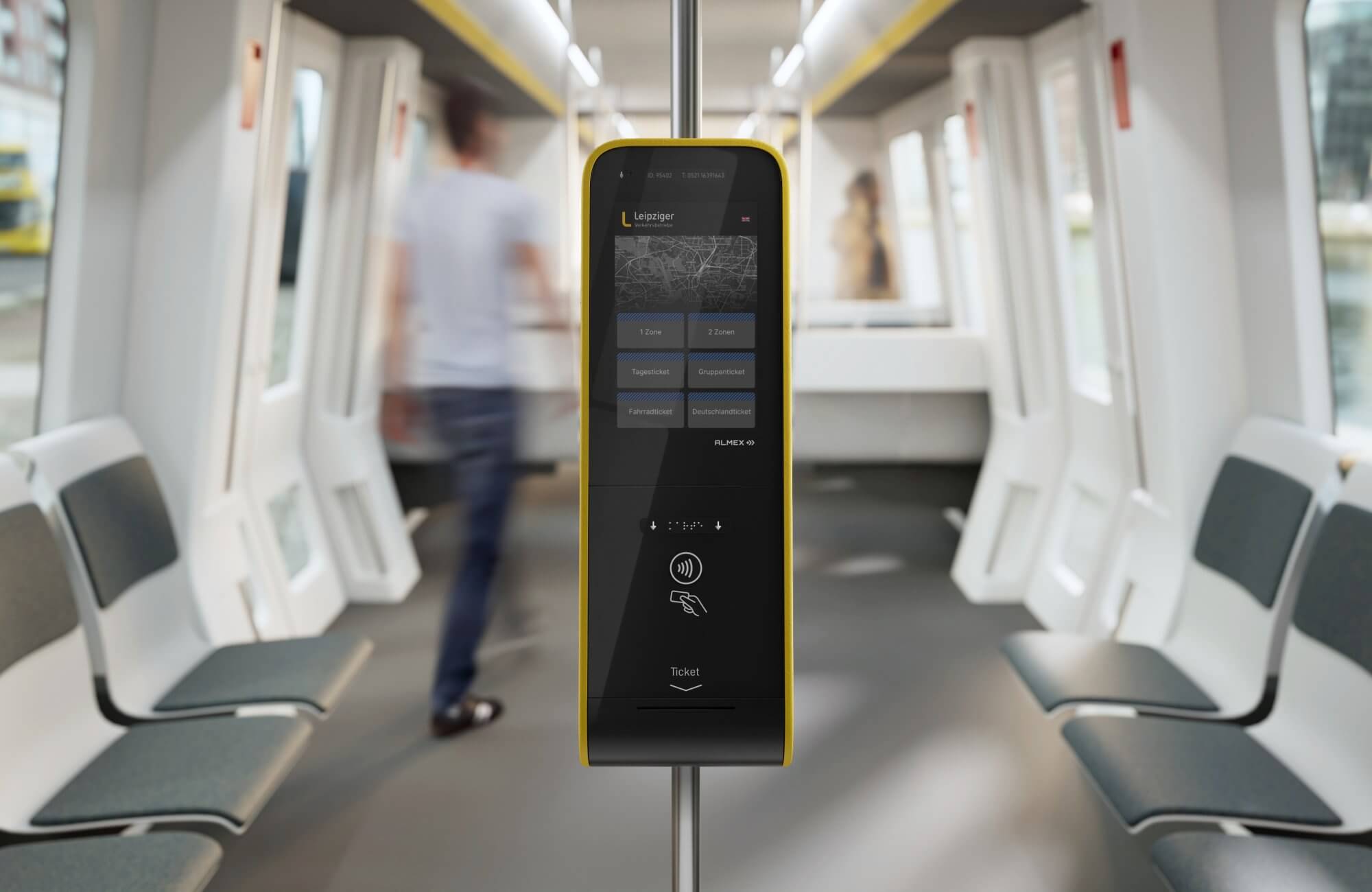
As ticketing increasingly moves to smartphones, the role of the physical ticket machine is changing. Yet for many passengers, access to a physical point of sale remains essential. Moving ticket sales from the driver into the passenger compartment creates a new challenge: providing everything passengers need while taking up as little valuable space as possible.
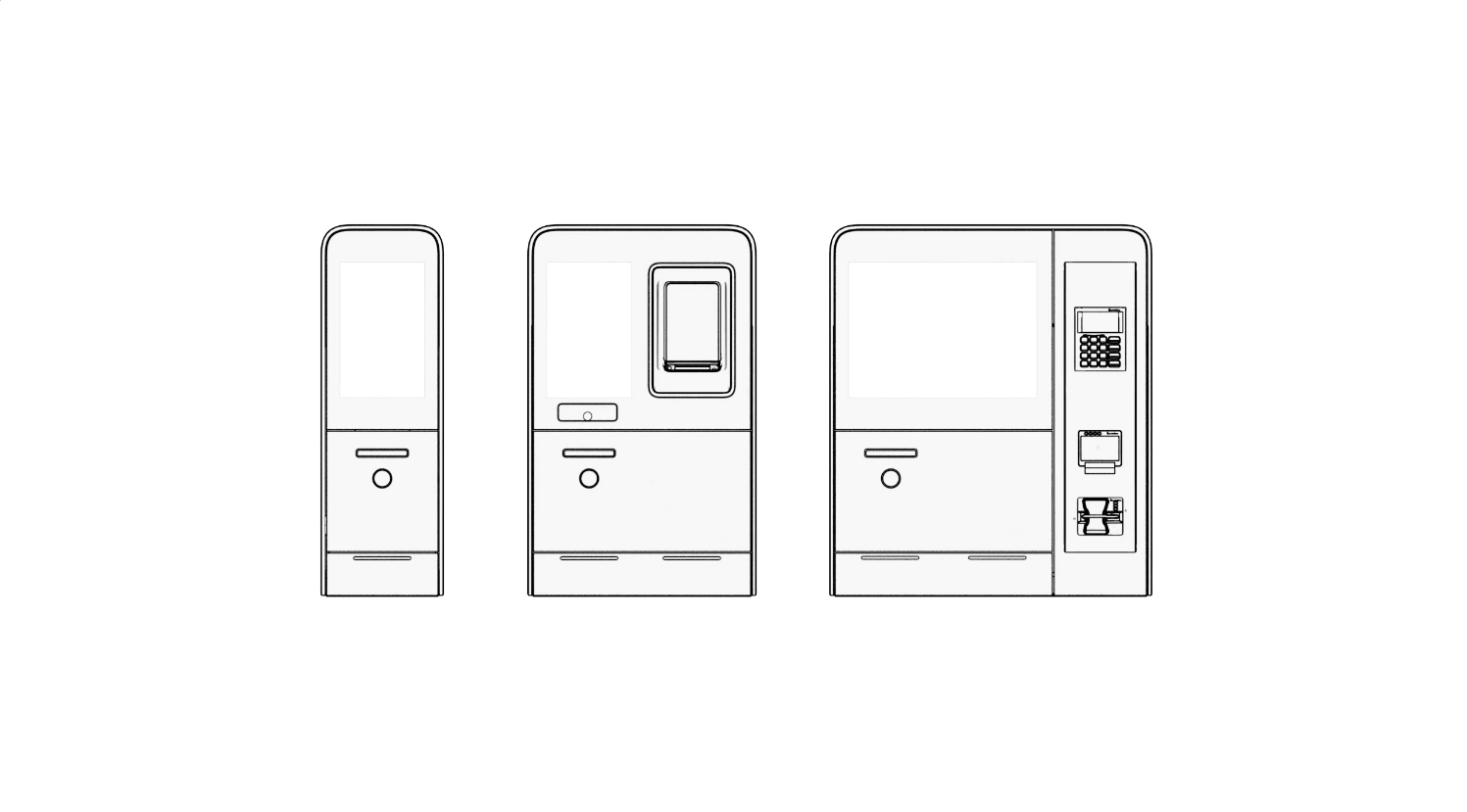
Together with Almex, we developed a highly compact family of ticket machines around a shared product architecture. Common components and a scalable housing concept enable different sizes and configurations — allowing Almex to respond efficiently to different operators, vehicles and payment requirements. Accessibility requirements are integrated into the architecture, influencing dimensions, positioning and reach.
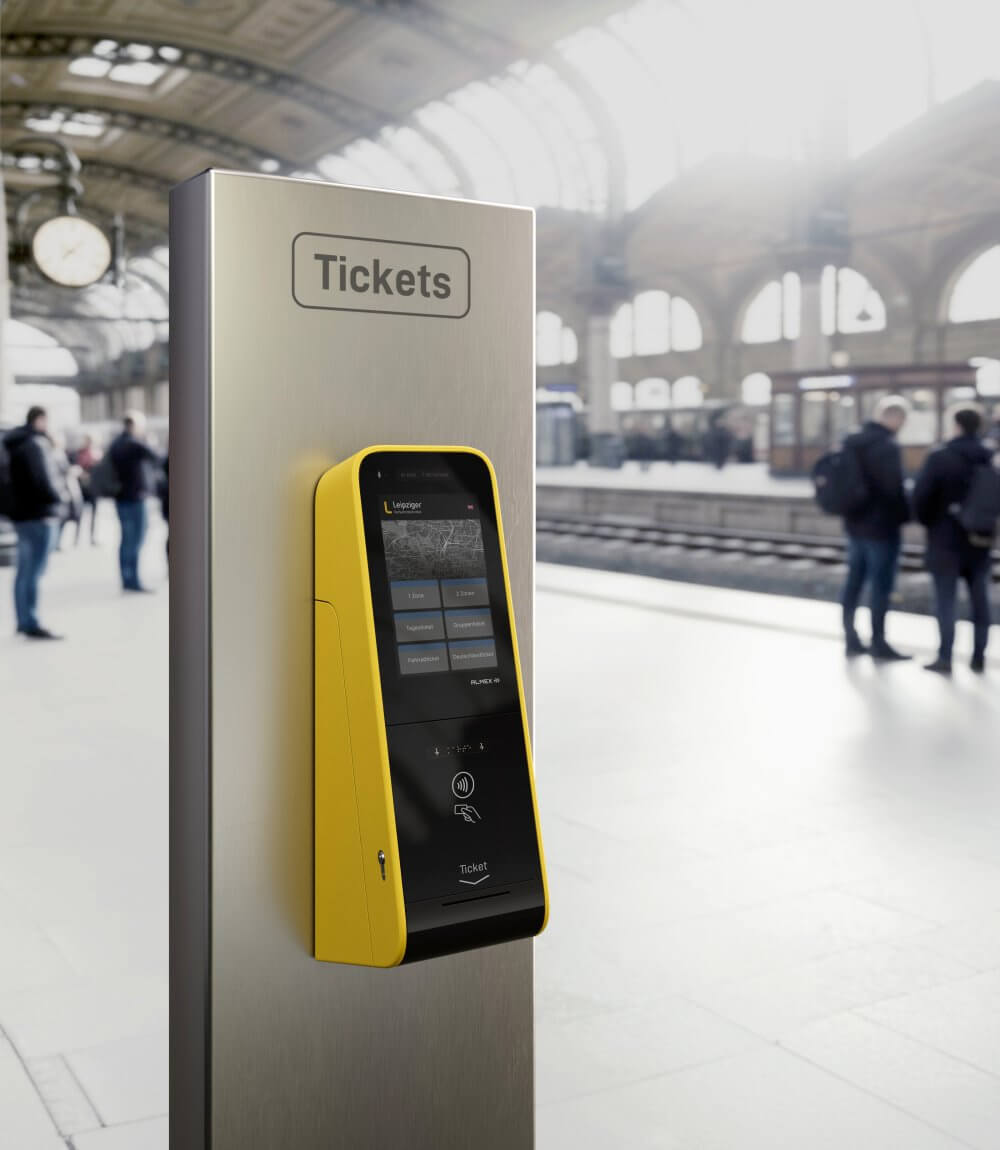
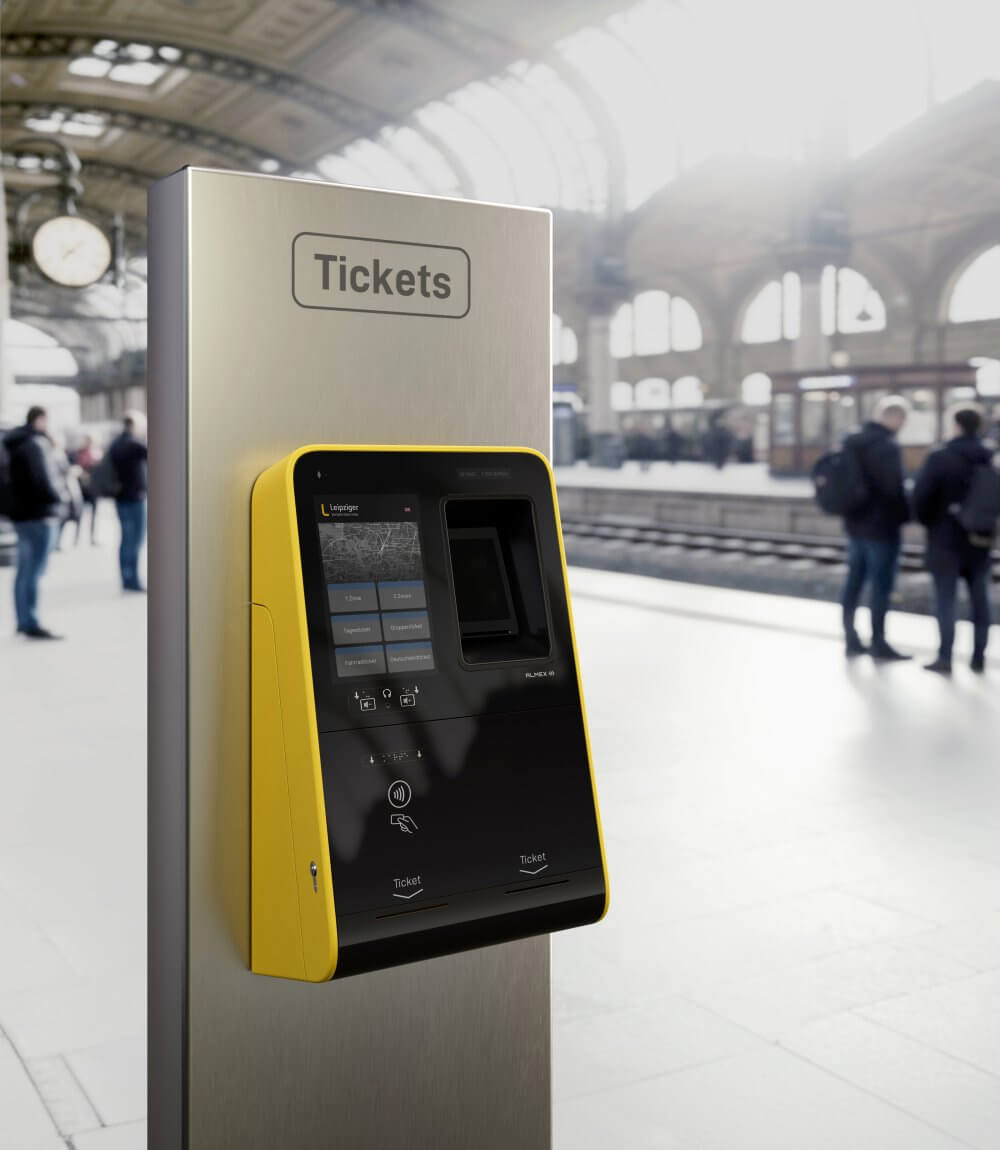
Installation and service were designed into the system from the beginning. An adaptable mounting shell forms the interface between vehicle and machine, allowing the terminal to be simply hooked in and secured after installation and electrical connections are completed. All relevant components are accessible from the front, while optional dual printers extend service intervals and provide redundancy. If necessary, the complete terminal can be replaced within seconds, without tools.
Throughout development, pragmatic usability prototypes helped us test dimensions, accessibility and service procedures. The resulting product family combines a minimal footprint with the flexibility to adapt to different vehicles, operators and applications — without developing individual solutions from scratch.
Acknowledgment
Red Dot Award